
Published:
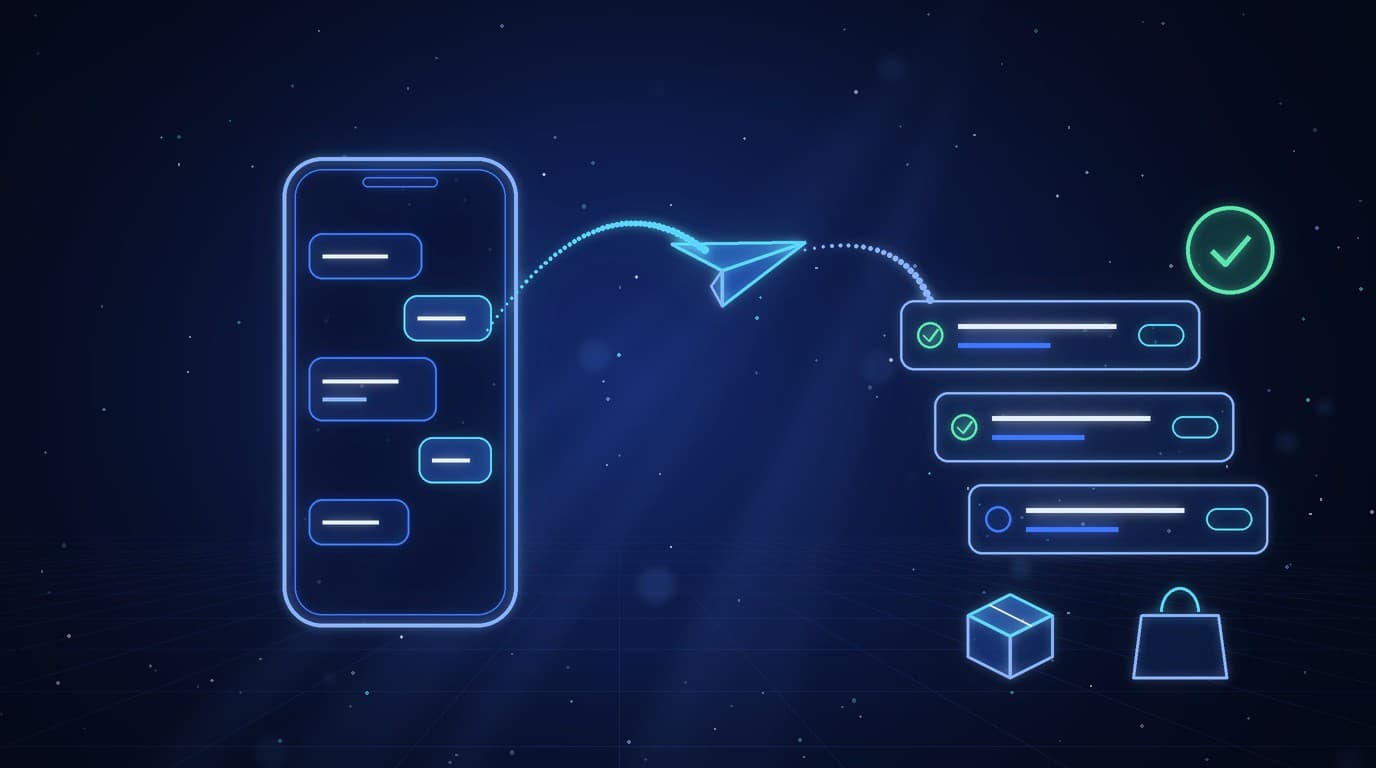
What an order bot consists of, how payment gets connected, where an order lands, and when a human operator is needed. Plus a realistic launch timeline.
Taking orders by phone has one problem: if the person is busy or writes at night, the order is lost. A Telegram bot closes that gap — it answers no matter the time.
Here is what an order bot is made of and what it takes to run one.
What an order bot consists of
A working order bot has four parts: a list of products or services, a cart, order details (name, address, phone), and a confirmation message. Without these four, a bot becomes a showcase — it displays but does not sell.
- Categories and a product list with photos and prices
- Adding to the cart and changing quantity
- A delivery address or pickup point
- A confirmation message with an order number
How payment gets connected
In Uzbekistan there are two paths: a payment link through Payme or Click, or cash on delivery. Many shops keep both — the customer picks.
A payment link is sent automatically once the order is confirmed, and a notification comes back to the bot once it is paid. This part is set up once and then runs on its own.
Where an order lands
An order should land in two places: an admin panel or group the operator watches, and a database that collects statistics. If orders only drop into a Telegram group, old ones get lost in the chat, and there is no record of how much was sold by the end of the month.
A group is enough for a small flow. If there are dozens of orders a day, a separate admin panel is needed, for statuses, search and reporting.
When a human operator is needed
The bot answers standard questions and takes the order, but it cannot resolve everything. When an address is unclear, an item is out of stock, or a customer complains, an operator is needed.
That is why a "contact an operator" button should always be in the bot. Creating the impression that the bot handles absolutely everything is the one thing that breaks trust.
Launch timeline
If the product list and prices are ready, a standard order bot launches in one to two weeks. Most of the time goes into connecting payment and running test orders.
If you are planning an order bot, the Telegram bots service page shows what each feature costs.